Greyzone's Final Conference
Media
Image
Blog content
The conference examined complex processes of political memory-formation in the wake of systemic violence, addressing competing national mythologies, their affective modalities, genres and material instantiations. It paid particular attention to critical artistic interventions, drawing on their ability to reveal the ambiguities of political violence and to sketch images of alternative futures. Our goal was to displace the predominant victim-perpetrator binary, challenge linear political visions of transcending the past and nurture visions of solidarity that remain deeply anchored in the murky terrain of past complicities and resistances. The conference brought together perspectives from political theory, memory studies, art, history, transitional justice, literature and film to interrogate the risks and potentials involved in remembering histories of violence and loss. It consisted of plenary sessions with leading international experts and panel presentations with candidates selected through an international call for papers. The conference was funded by the European Research Council and supported by the Law School (University of Edinburgh). It also served as the launch event of CRITIQUE – a new Centre for Social and Political thought at the University of Edinburgh.
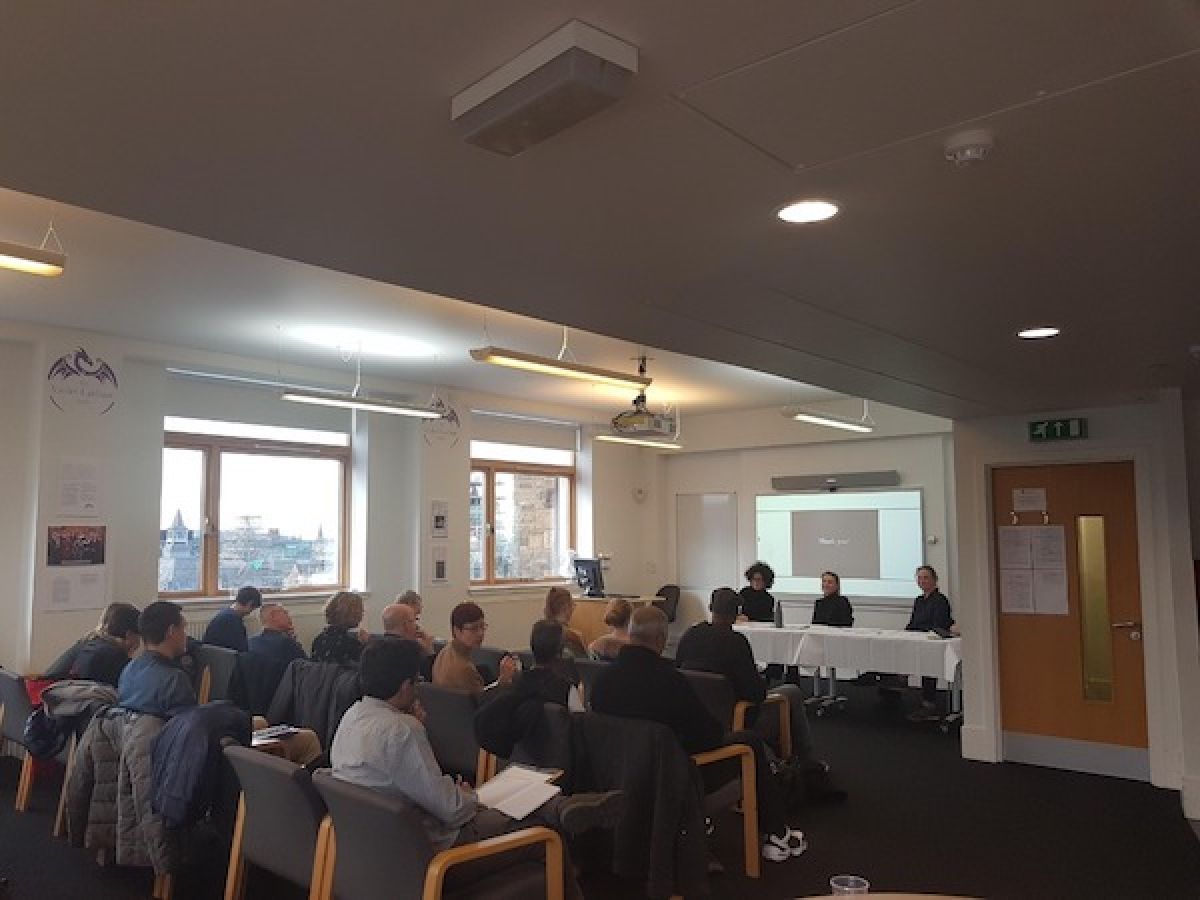
Our team kick-started the discussion with a presentation of the Greyzone project findings. We outlined our theoretical conceptualisations of the grey zones of complicity and resistance, and shared our discoveries about the ethical and political potentials of art in illuminating the systemic violence. Our presentation was followed by the plenary session on Agonistic Aftermaths, featuring thought-provoking presentations by Vikki Bell (Goldsmiths, University of London) and Hans Lauge Hansen (Aarhus University). Vikki’s presentation engaged the possibilities and limits entailed in different spaces of remembering violent pasts, including trials, art works and museums. Hans, in turn, approached the complexities of memory-making from the perspective of the present noting the lack of utopian political possibilities. Both presentations raised the pressing question of how to turn the paralysing sense of loss involved in remembering histories of violence into an occasion for new solidarities and hopes. The first day of the conference ended with a keynote address by Pumla Gobodo-Madikizela (Stellenbosch University), entitled Witnessing Trauma: A Call to Reparative Humanism. Gobodo-Madikizela inquired into the potential of music, painting and re-enactment as distinct memory practices, capable of conveying the embodied sense of loss and breaking through the ‘void of voicelessness’ that marked the victims’ testimonies before the Truth and Reconciliation Commission in South Africa. These practices, she argued, can play a significant role in kindling relations of emphatic repair, issuing an invitation to transcend ressentiment and embrace an ethics of care and humanness.
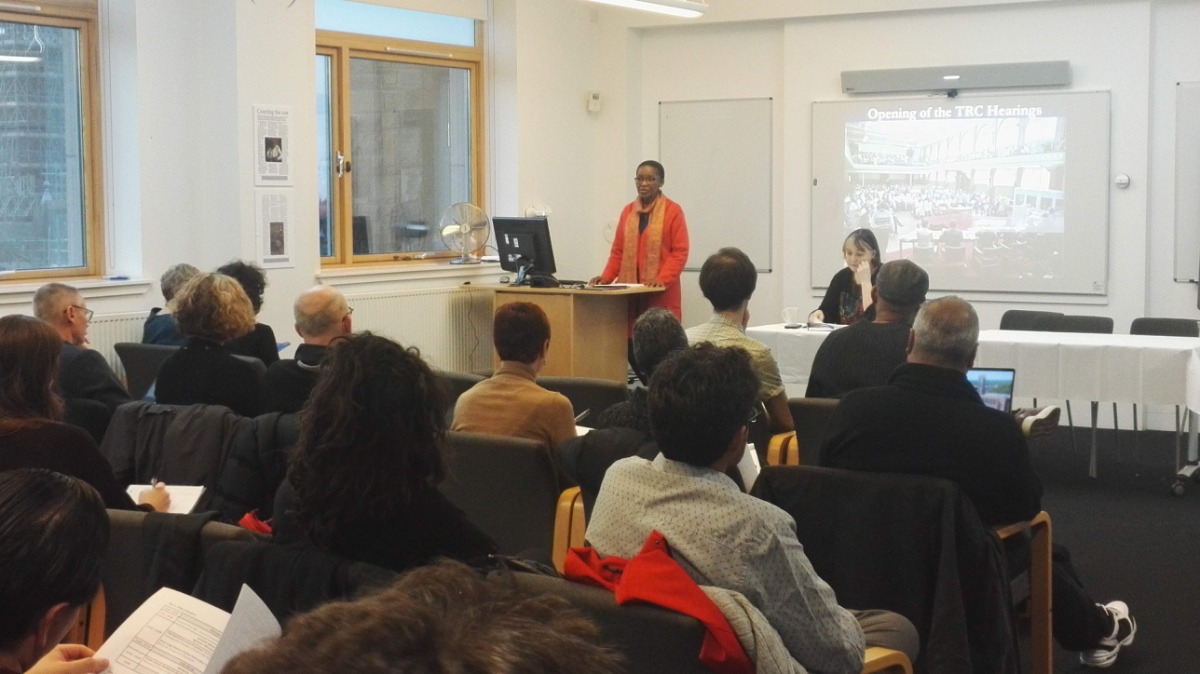
The second day consisted of two panels and two plenary sessions. The first panel entitled (Post-)colonial Temporalities: Melancholia, Loss, Resistance connected three presentations: on melancholia as an affective structure of the everyday life in post-apartheid South Africa, that is not only racial but also classed, gendered and intergenerational; on Native American responses to the trauma of invasion, conquest, and colonization in early oral traditions up to modern-day fiction and poetry; and indigenous spatial rhetoric and practices of place-making as forms of anticolonial resistance across material, digital, and hybrid platforms. This panel was followed by the first plenary session, which expanded the multisensorial approach to cultural history to include not just visual and oral but also aural or sonic memory. The two speakers, Joseph Winters and Esteban Buch, examined music – Hip Hop and Rock and Roll –for their potential to embody a black aesthetic concern and an anti-war political message, respectively. The second panel of the day, Reconfiguring Memory: Materiality, Imagination, Solidarity engaged with different repositories of memories from museums, to parks and archives in order to undercover the multi-layered histories that go against hegemonic official narratives. The presenters drew out visual connections between the past and present. The day ended with the engaging and thought-provoking plenary talks by Emily Beausoleil and Melissa Steyn. While Beausoleil looked at Maori protocols of encounter as a way of listening intergenerationally in order to challenge settler-colonial hierarchies of knowledge production, Steyn examined ‘white ignorance’ which she defined as a social achievement with strategic value. Steyn discussed the difficulty of interpellating this subject position that entertains this kind of ignorance in post-apartheid South Africa and she ended her talk by suggesting that what white people need to ask themselves is ‘what does it mean to be human?’
The third day was composed of one plenary session and three panels. During the plenary, Mihaela Czobor-Lupp (Carleton College) and Maria Alina Asavei (Charles University) approached the separate but interwoven ways in which memory, exile and archive can converse with each other. Whether through the oeuvre of a literary writer who is ‘too Jewish for Romanian culture and too Romanian for Jewish culture’, or in the specific features of what can be described as the ‘Living Archive of Romani Persecution’, both speakers highlighted not only the potential but also the limitations of memory-making processes.
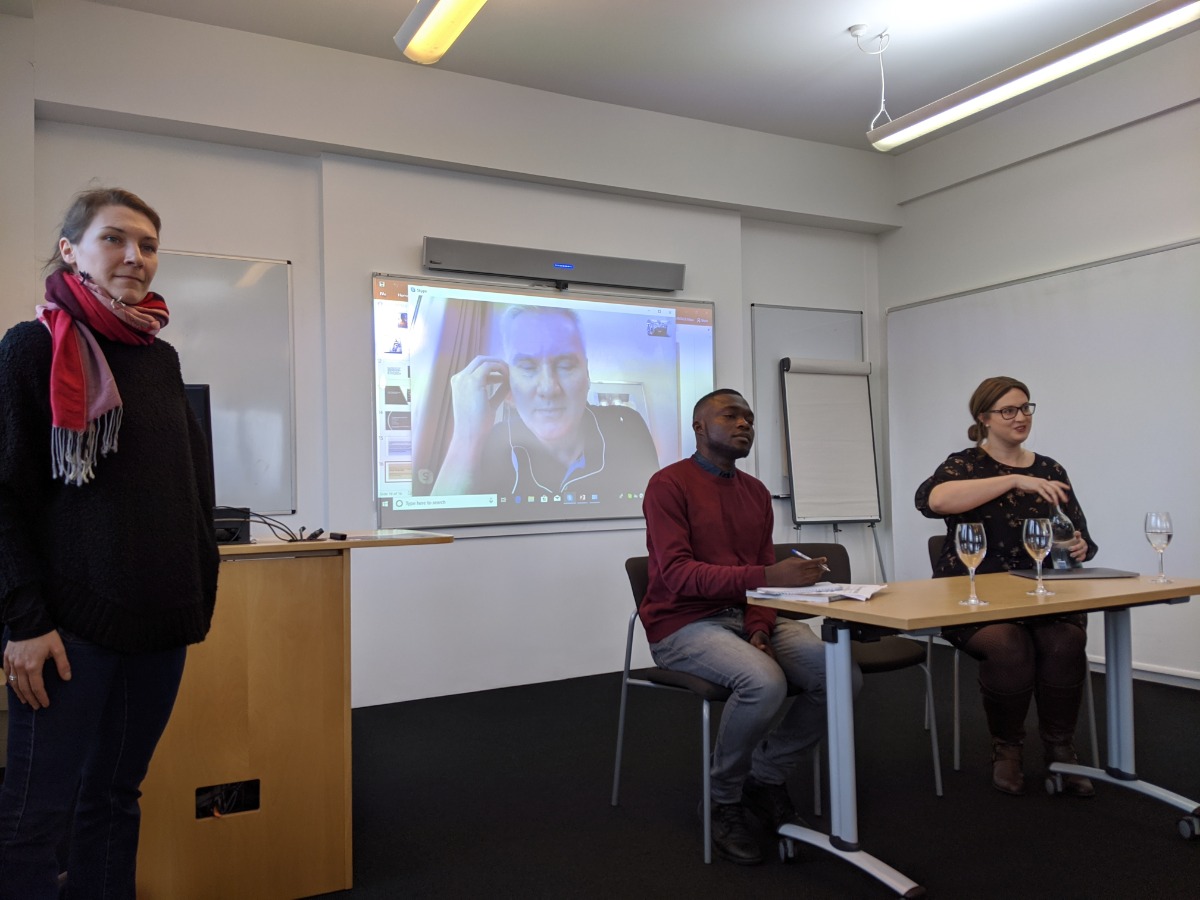
The first panel of the day, Counter-Memories: Contesting Hegemonic Discourse, specifically addressed radical pasts and violent presents. These presentations considered the range of different memories that exist in the official documents of ‘dominant countries’ and in the material places of ‘postcolonial settings’ where, through escraches or protest tents, the memories of conflictive pasts resist forgetting.
In the second panel of the day, Resilient Violence, Fragile Horizons of Hope: Confronting the Ambiguity of Beginning Anew, the three papers tackled a common issue that post-conflictual communities have to address in order to continue living together: conviviality with (as opposed to the exploitation of) nature in Latin-American literature; the public murals in a small north-American community where the tensions of the past are addressed through painting and art; and, paradoxically, how the South-African post-apartheid context modified neighbourhood relations in ways that make repair difficult.
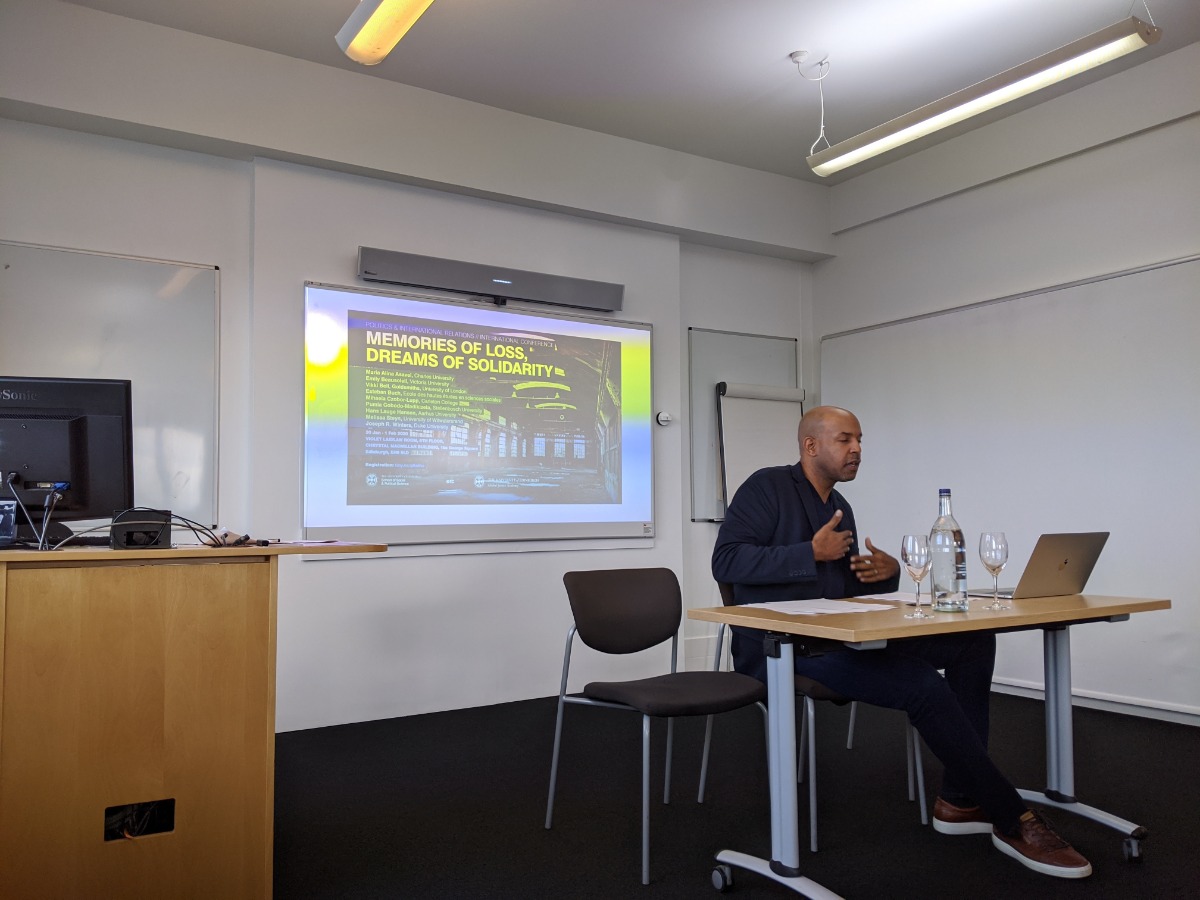
Finally, the conference’s last panel, Dreamscapes: Violence, Remembering and Contemporary Socio-Political Struggles, grappled with least three separate ways in which dreams can relate to past and present conflictive conjunctures. First, an anthropological record of the effects that fieldwork in conflict zones has on the researcher’s subconscious was discussed. Secondly, we heard a paper embracing a Deleuzian approach to how history surfaces in the dreams of contemporary Chileans in the context of current political crisis. The conference ended with a paper on the mental processes engaged by cinematographic depictions of torturers and perpetrators.
Across the three days, exciting conversations emerged between scholars who belong to different research fields. The event confirmed our suspicion that it is only by crossing arbitrary disciplinary boundaries that we can grapple with the complexity of memory-making in the wake of widespread complicity with violence and resilient oppressive structures. We thank everyone for their participation, and we look forward to consolidating the collaborations we initiated in January!